
FROM THE GROUND UP: NATURE'S INTELLIGENCE, BIOREGIONAL CULTURE, AND SOCIAL HEALTH
Moderated by Karenna Gore with Elizabeth Roach Cain, Janet Hawkes,
Emily Stutzman & Derrick Weston
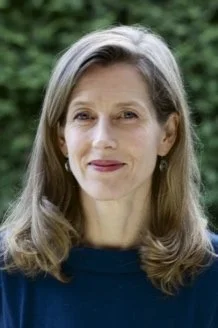
Karenna Gore
Founder and Executive Director, Center for Earth Ethics at Union Theological Seminary
Karenna Gore is the founder and executive director of the Center for Earth Ethics (CEE) and a visiting professor of practice of earth ethics at Union Theological Seminary in New York. Gore founded the CEE in 2015 to explore the moral and spiritual dimensions of the climate crisis. Working at the intersection of faith, ethics, and ecology, Gore guides the CEE's public programs, educational initiatives, and movement-building. In addition to these responsibilities, she is also an ex-officio faculty member of Columbia University's Earth Institute.
Gore is the author of the 2006 book Lighting the Way: Nine Women Who Changed Modern America. She serves as a board member for the Association to Benefit Children. Gore also sits on the board of Riverkeeper, which protects and restores the Hudson River. She is an expert in the United Nations' Harmony with Nature Knowledge Network, an online platform for practitioners, academics, and researchers.
A graduate of Harvard College, Gore earned her law degree from Columbia Law School and a master's in social ethics from Union Theological Seminary.
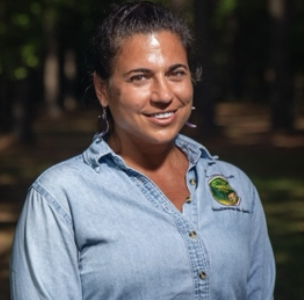
Beth Roach Cain
Co-Founder, Alliance of Native Seedkeepers
Beth Roach Cain is a citizen and Tribal Council Vice Chair of the Nottoway Indian Tribe of Virginia, where she also leads the Nottoway Water and Lands Initiative. She is the National Water Conservation Campaign Manager for the Sierra Club, co-chair of the Clean Water for All Coalition, and co-founder of the Alliance of Native Seedkeepers and Bertie County Seeds in northeastern North Carolina.
Her work is rooted in the understanding that the waters, plants, animals, lands, and people are part of an interconnected community of life, each with gifts to offer and responsibilities to one another. Drawing inspiration from Indigenous teachings of gratitude, reciprocity, and collective stewardship, Beth works to protect clean water, restore relationships with the natural world, preserve agricultural biodiversity, and cultivate regenerative local economies. She believes that the health of our communities is inseparable from the health of the living systems that sustain us, and that our responsibility is not simply to conserve nature, but to live in harmonic relationships with it for generations to come.
Dr. Janet E. Hawkes
President, Tellus Earth LLC; Board Member, The Waterfall Center
Dr. Janet E. Hawkes is president of Tellus Earth LLC in Ithaca, New York, and a forestry and agricultural scientist with more than 30 years of experience in sustainable and responsible agricultural practices. She consults with governments, companies, and NGOs on sustainable agriculture and environmental projects, and has served as chief science or technical officer for several companies, including RPM Ecosystems. She previously was managing director of HD1 LLC, an advisory firm focused on sustainable food and agriculture production, environmental
reclamation, agroforestry, and bioenergy. At Cornell University’s College of Agriculture and Life Sciences, she directed the Cornell Educational Resources Program from 1999 to 2005, and she has led international environmental and agricultural programs in the South Pacific, Asia, southern Africa, and the Caribbean. Her work emphasizes ecological restoration and agroforestry, and at a Center for Earth Ethics panel moderated by Karenna Gore she argued that scientists have a responsibility to elevate traditional ecological knowledge in government-run restoration programs. She serves on the board of The Waterfall Center and on the advisory board of the Waterfall Unity Alliance, alongside Karenna Gore. Locally, she was a founding member and former board chair of the Cayuga Lake Watershed Network and has served as co-chair of the Finger Lakes Regional Prosperity Network. She holds a Ph.D., M.A.T., and B.S. from Cornell University.
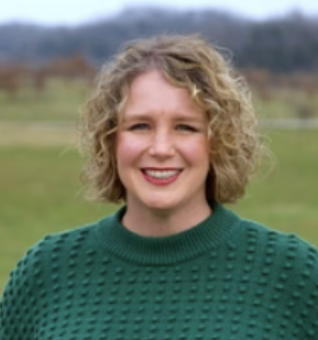
Dr. Emily Stutzman
Head of Research and Outreach, Caney Fork Farms
Dr. Emily Stutzman is head of research and outreach at Caney Fork Farms, a certified organic, regenerative farm in Carthage, Tennessee, that doubles as a living laboratory for research on soil carbon, agroforestry, and the soil microbiome. A scholar of socio-ecological systems, she focuses on the sociology of agriculture and natural resources. Since joining the farm in November 2024, she has led research partnerships including soil carbon sampling with Skidmore College and The Soil Inventory Project, and she co-authored 2026 research with University of Tennessee and Oak Ridge National Laboratory scientists on a
nitrous-oxide-reducing soil bacterium isolated at the farm. She is also adjunct faculty at Warren Wilson College, where she teaches regenerative agriculture and food-systems courses to students completing semester fellowships at Caney Fork Farms, and an associate researcher at Skidmore College. From 2015 to 2025, she was academic director of Lipscomb University’s Institute for Sustainable Practice in Nashville, where she directed graduate and undergraduate programs in environmental and sustainability science and rose to associate professor. Her earlier research examined the role of natural resource professionals in agroforestry adoption across the Southeast and the role of fish farmer organizations in developing Uganda’s commercial aquaculture sector. She has observed that a central challenge in climate communication is that many human-caused changes are not immediately visible at the local level. She holds a Ph.D. in forestry and an M.S. in rural sociology from Auburn University.

Rev. Derrick Weston
Director of Theological Education and Formation / Acting Executive Director, Creation Justice Ministries
Rev. Derrick Weston is director of theological education and formation and acting executive director of Creation Justice Ministries, an ecumenical organization that works with 39 denominations to help Christians live in right relationship with God’s creation. He joined the organization in 2023 as theological education and training coordinator and moved into his director role in January 2025. An ordained Presbyterian (PC(USA)) minister, he has spent more than two decades as a pastor and community organizer, including leadership roles at The Pittsburgh Project, Antioch College’s Coretta Scott King Center, and Arlington Presbyterian Church.
Much of his recent work sits at the intersection of faith and food justice: he co-hosts the Food and Faith podcast, founded the Food and Faith Storytelling Collective, and produced the short film series A Wilderness Like Eden. He is co-author of The Just Kitchen: Invitations to Sustainability, Cooking, Connection, and Celebration (Broadleaf, 2023), and his book Food For All is part of the Building a Moral Economy series. He frames the climate crisis, and environmental racism in particular, as a spiritual crisis, and he helped develop Creation Justice Ministries’ resource The Canopy of Creation: Trees, Faith and the Work of Justice. He holds a B.A. in film studies from the University of Pittsburgh and a Master of Divinity from San Francisco Theological Seminary, and was a Re:Generate fellow at Wake Forest School of Divinity. He and his wife, Rev. Shannon Weston, have four children and live outside Baltimore, Maryland.